
Live composting data
by
Kiersten Engstrom, Lily Valverde, Jinyu Fang
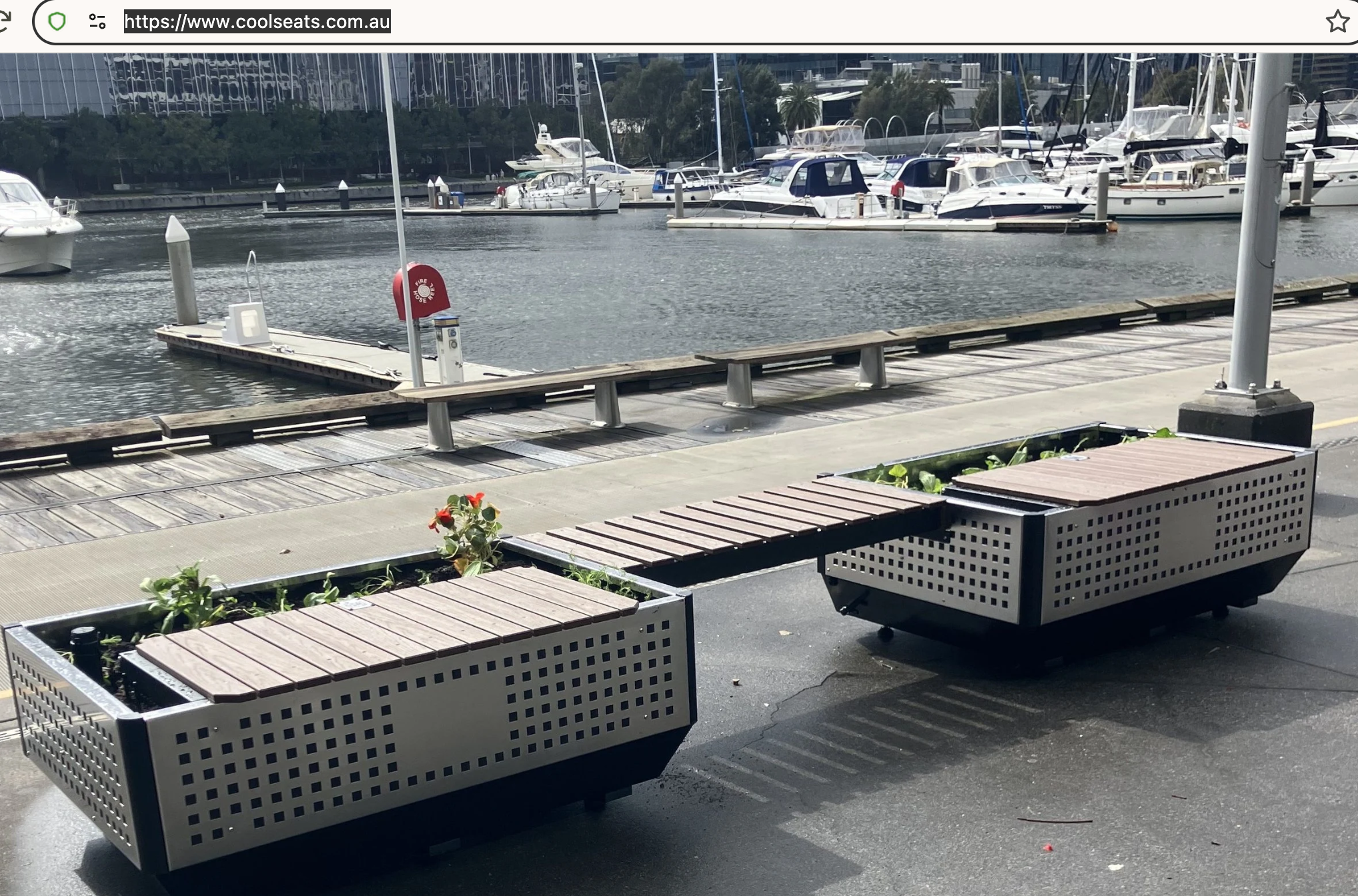
• Coolseats - Smart Worm Benches - beside the Yarra River, Melbourne. Council data sensors are under the seats and in the compost baskets located under the seats
Melbourne’s Worms at Work pilot turns street benches into composting stations while collecting real-time data on use and environmental health. Anyone may get the data.
The sensors were purchased and installed by Melbourne City Council separately to the seat benches as part of a trial of public composting in the streets called, Worms at Work.
This is the first time we citizens and governments may freely see small-scale public composting in action in the city and get the data about its performance.
The data is updated every three hours and is fully open and free to the public through the City of Melbourne website.
The data can be used by Melbourne City Council and the community.
The data shows how much use the seat is getting and also provides information on whether maintenance is needed, volumes of food waste, pH of the compost, and other data.
Melbourne City Council and the community may see how many people sat on the seat as well as the weather when it was and was not sat on. This allows the Council and community to see the value of the coolseat as a public resource.
The Council’s technical and data technician for the project, Dev Patel, has provided this overview of the data and its role:
“. . . sensors were incorporated to test and validate the functionality of the bench design. This included understanding whether temperatures were maintained within safe ranges, how effectively water is stored and how often it needs to be replenished, seat usage levels, estimated eCo2 impacts, odour monitoring, and total food‑waste diversion.
All these elements were successfully tested during the pilot, so you could highlight that the bench design has been proven effective using this approximate, real‑world data. The dashboard data is up to date and can be referenced to support the outcomes.
It’s also worth noting that the data captured through the sensors and dashboard is indicative rather than exact.“
What is a Coolseat?
Coolseats provide free soil-making and fertiliser production for locals to use in the homes or the footpath gardens.
Being delivered flat-packed and assembled on sites across Australia by locals, schools, cafes they also do not require energy for installation or maintenance and almost none for watering. School children, parents, people in units, houses and cafes assemble and use them.
Wicking cells below the garden beds and compost baskets store water for the plant roots. Because the water is below the garden bed these Waterups cells save 80% of water and watering time. The benches also harvest and store rainwater as the garden beds and the seat made of recycled materials is a decking with gaps which allow the rain through. The rainwater both cools and nourishes the compost therefore cooling the worms, too. Happy worms equals happy composting.
Coolseats are part of the footpath gardening by residents on streets and schools in New South Wales, Victoria and South Australia, as they contain plants and vegetation in the garden beds of the coolseats. Residents and cafes use and maintain them. Maintenance involves turning the compost to speed up the process, harvesting the free soil and compost juice for personal or other uses and for just sitting on.
Coolseats are rat proof although from time to time rats try to get in despite the steel mesh. Defeated by the mesh they stop trying.
How sensors in the Coolseats work
A Coolseat looks like a bench but when you lift the seat lid, there are baskets underneath where people put food scraps and organic waste (like veggie peels, coffee grounds, paper napkins). Community members or nearby cafés add food waste then they mix it with dry material - carbon - like shredded cardboard or leaves and the carbon speeds up the composting process. After that the worms and microbes do the work by breaking down the waste into compost. This helps reduce landfill waste and pollution!
Each coolseat in Melbourne’s Fishermans Bend is fitted with sensors that monitor compost health and usage:
● Seat Usage Sensor – Counts when people sit on the bench.
● Compost Moisture Sensor – Measures moisture to keep worms healthy.
● pH Level Sensor – Checks acidity for a balanced compost.
● TVOC & CO₂e Sensor – Monitors air quality around the bench.
● CO₂e Sensor – Checks air inside the compost.
● Seat Status Sensor – Records when food scraps are added.
● Odour Sensor – Tracks smells to prevent overfeeding or excess moisture.
The data is then displayed like this through the City of Melbourne website
Jinyu Fang, a fellow intern at Sustainable House, has made sample figures that explain how to read each data box shown in the overview panel. These may be helpful for the blog to explain how to understand the data.
Seat Used over 5000 times since installation (01/09/2025)
Green bars represent compost condition is healthy for that specific compost indicator
Yellow bars represent compost is somewhat healthy but can be improved
Orange Circles represent how much food waste is being avoided from landfill and how much CO2 emissions is being saved by Coolseats
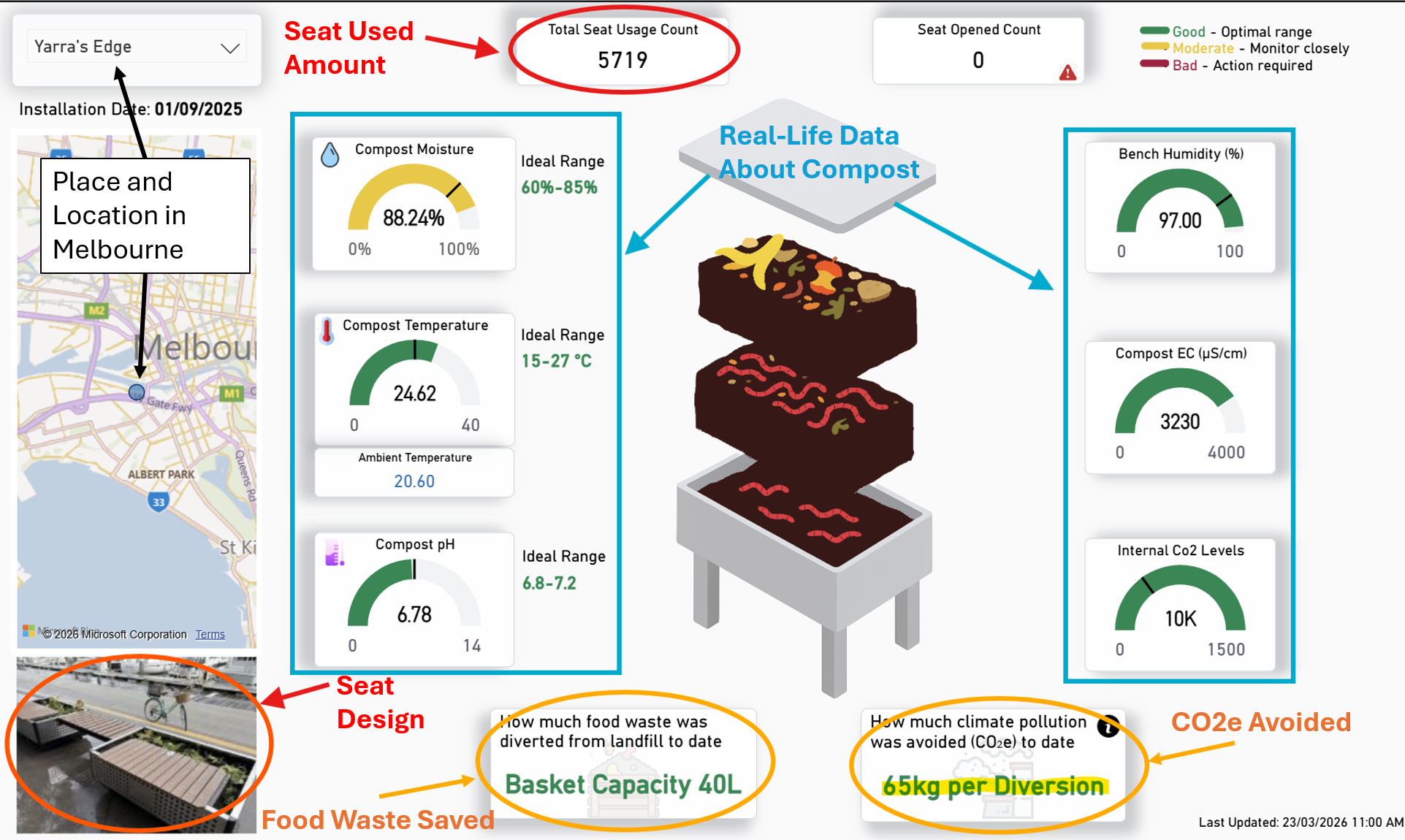
• Jinyu Fang’s explanation of data on the Council’s data dashboard
Another example of how to read each individual data box with different color lines/circles:
Black: Title of the Compost Data being measured
Green: Tells us the range the value should be within
Red: What the current value for the measured data compared to where the desired value is (black line in bar)
Yellow/Purple: Indicates the color of the bar, determining if the compost needs either no work, some work, or a lot of work
What the Data Shows
● How much total food waste was diverted from landfills due to the Coolseat
● Amount of climate pollution or CO2 emissions avoided due to composting.
● The Yarra Edge coolseat has been sat on over 4,000 times in the last five months, showing high community engagement.
● Sensors give insights on moisture, temperature, pH, and air quality to keep the compost ecosystem healthy.
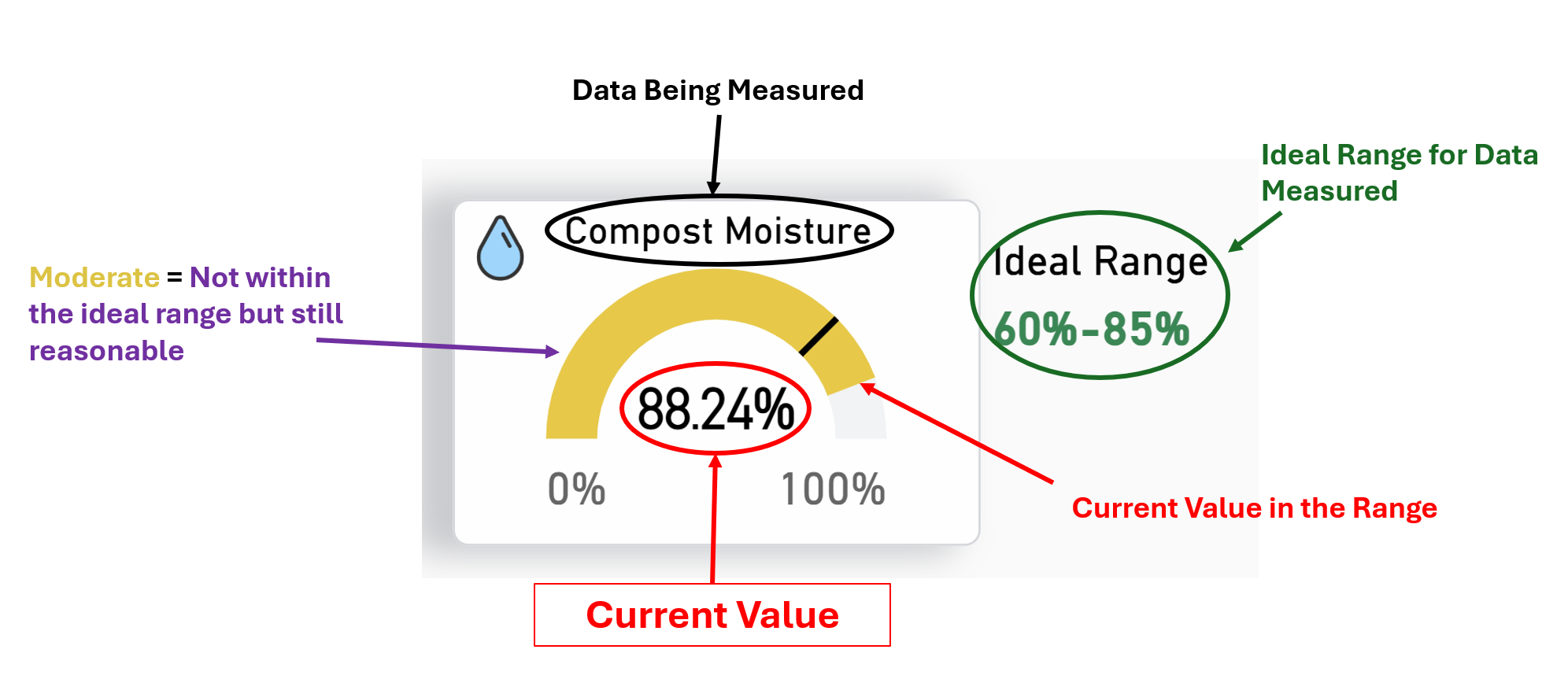
• Jinyu’s explanation of the Council data dashboard
So do people even use coolseats? Of course they do!
Even small actions we make by composting in our apartment balconies, on our street footpaths, parks, school grounds can make a big impact on our journeys to ending and reducing food waste.
This pilot shows that urban composting can be interactive, sustainable, and measurable. By sharing this data publicly, Melbourne City Council is empowering communities across Australia so they can see the benefits of small, local actions we may all take for a greener street, suburb, school and city.
Source: sensors-and-data
by
Kiersten Engstrom, Lily Valverde, Jinyu Fang
Interns with Sustainable House